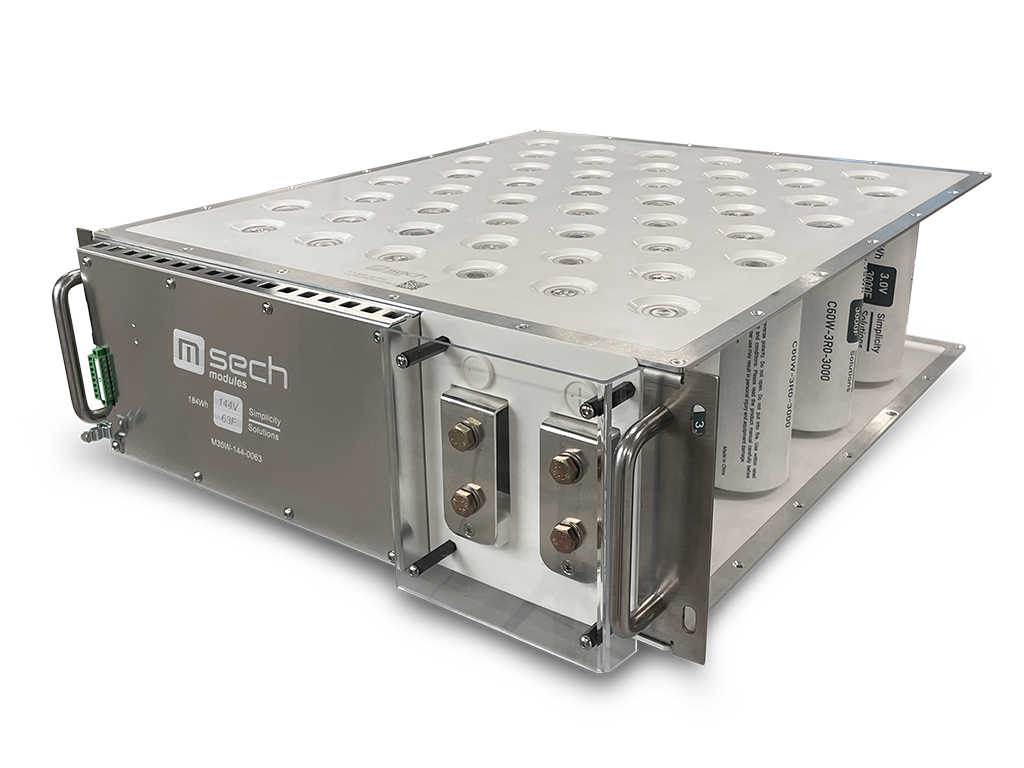


World’s first E-STATCOM
Siemens Energy, in collaboration with TenneT Germany, has developed the world’s first E-STATCOM, providing synthetic inertia and stability for renewable-ready grids. This innovative installation delivers ±200 MW of grid-forming stability, powered by SECH ESS ultracapacitor modules.
Innovative E-STATCOM based on SECH ESS ultracapacitor modules for grid stability
The world’s first E-STATCOM technology revolutionizes grid stability, enabling a renewable-ready power grid that demonstrates resilience and sustainability.
For decades, traditional power plants like coal and nuclear not only generated electricity but also acted as stabilizers, maintaining the grid frequency at 50 or 60 Hz. When demand spiked or a generator went offline, the kinetic energy from these massive spinning generators provided a buffer, giving grid operators valuable seconds to respond. These seconds often meant the difference between a stable grid and equipment damage or even nationwide blackouts.
However, as the world transitions to carbon neutrality and phase out conventional plants, maintaining that stability has become increasingly challenging. The energy transition involves shifting from conventional power plants with heavy rotating machinery to inverter-based sources like wind and solar, which do not provide the inertia necessary for stable grid frequency.
This is where E-STATCOM comes into play. The E-STATCOM facility in Mehrum, Germany, a Static Var Compensator with ultracapacitors, also known as SVC PLUS FS®, realized by Siemens Energy and operated by TSO TenneT Germany, stands as the first of its kind, offering a solution for the challenges presented by the decline of coal and nuclear energy. E-STATCOM is capable of both voltage and frequency stabilization and hence preventing lights flicker, equipment breaks, and blackouts.
The key benefits of E-STATCOMs with ultracapacitor are:
- Blackout Prevention – Instantaneous response with up to hundreds of MW for several seconds to stabilize the grid during transient events. Due to the high-power density the ultracapacitors support the immediate active power response requested by the STATCOM control
- System Strength Support – Due to the use of ultracapacitor ESS the STATCOM can stabilize extremely weak or even islanded grids
- Cost-Effective – Low lifetime expenditures, long lifetime, low losses, high efficiency, and compact footprint
- Easy maintenance – Ultracapacitors can be fully discharged for safe maintenance
- Flexibility and scalability – Easy scalable for various power ratings
- Environmentally Friendly – Small footprint and no CO2 emissions during operation
- Safety – No self-inflammation, no X-protection required
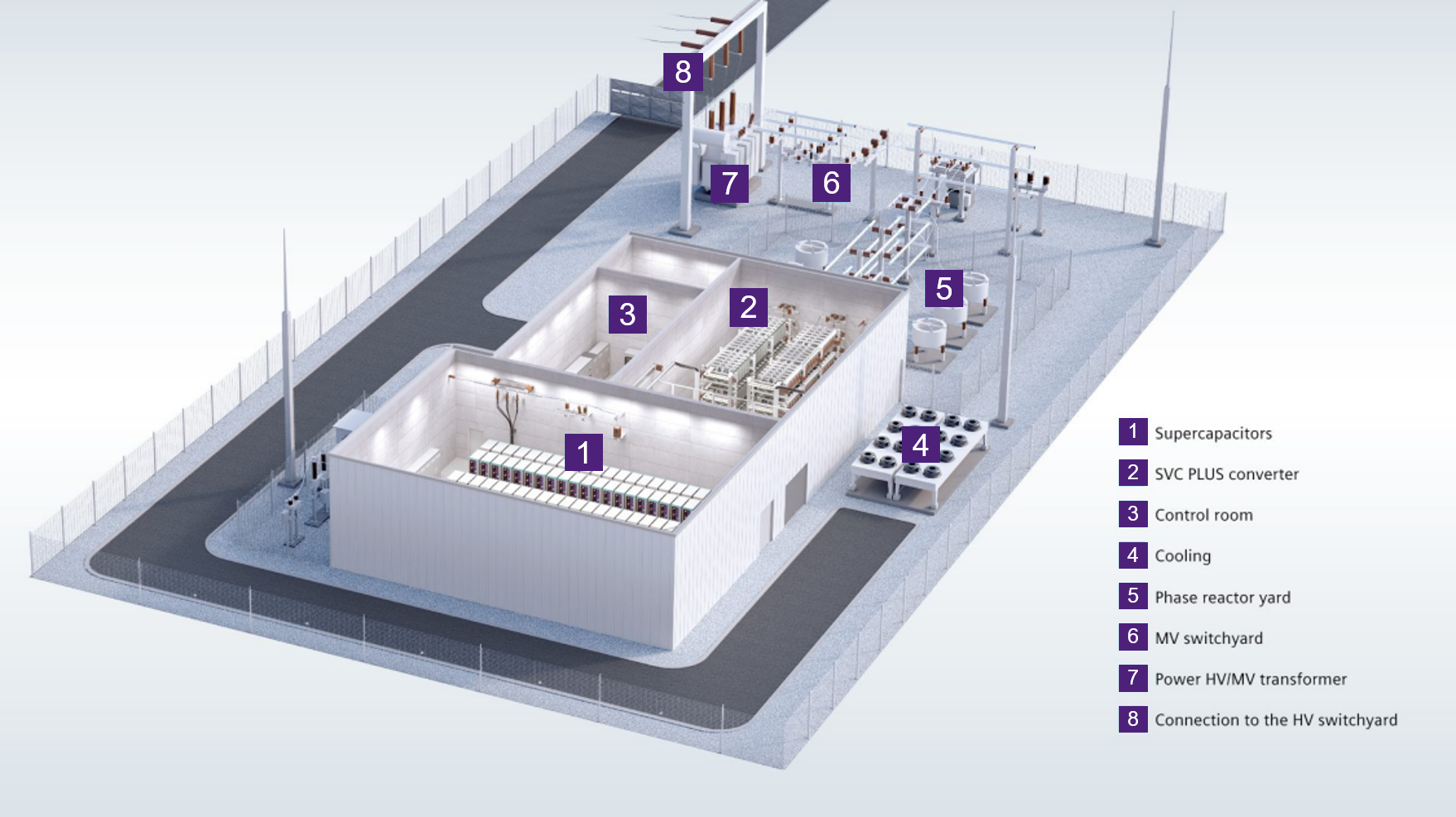
E-STATCOM stabilizes the grid by using ultracapacitors to deliver short bursts of active power, creating synthetic inertia. This technology stabilizes both voltage and frequency, operating constantly and fully automated, ensuring that the grid remains stable around the clock.
Siemens Energy’s world’s first E-STATCOM facility boasts impressive technical specifications that highlight its advanced capabilities. It is designed to address any voltage level, ensuring versatility in various grid applications. The facility has an installed power capacity of 300 MVA and can deliver an active power output of ±200 MW within milliseconds. With an available energy storage capacity of 400 MJ (upscaling possible) and an emulated inertia contribution of up to 6000 MJ, significantly enhancing grid stability. The entire system occupies a footprint of 4050 m², which includes the power transformer, making it a compact yet powerful solution for modern energy challenges.
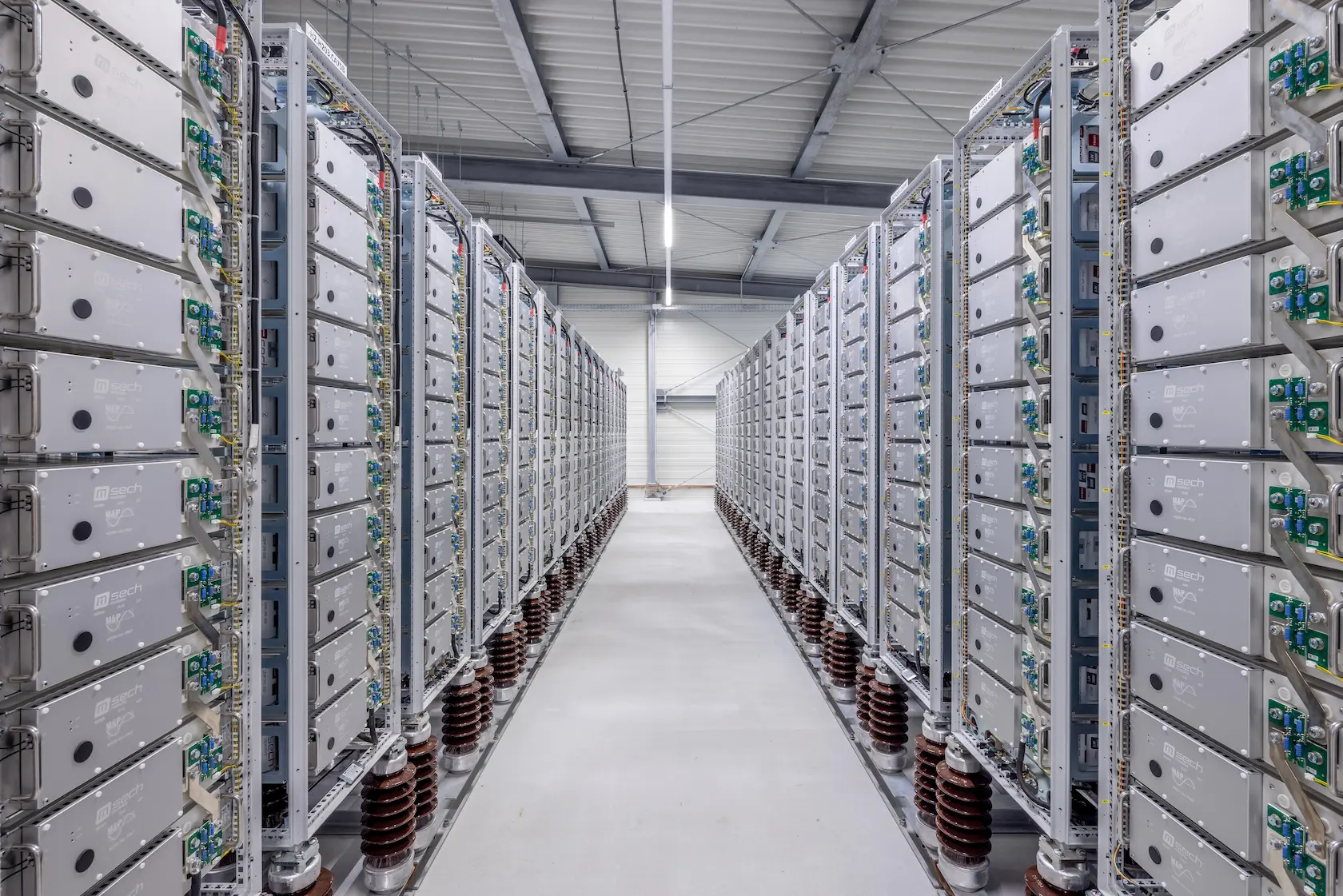
When entering the air-conditioned halls of the E-STATCOM facility in Mehrum, the scale of the solution becomes clear. Individual SECH ultracapacitor cells, each the size of a soda can, are combined in SECH ESS modules and stacked in towers, forming a reservoir of instant electrical energy that can be injected into the grid as needed. Unlike batteries, ultracapacitors store electricity directly and can deliver power bursts in milliseconds.
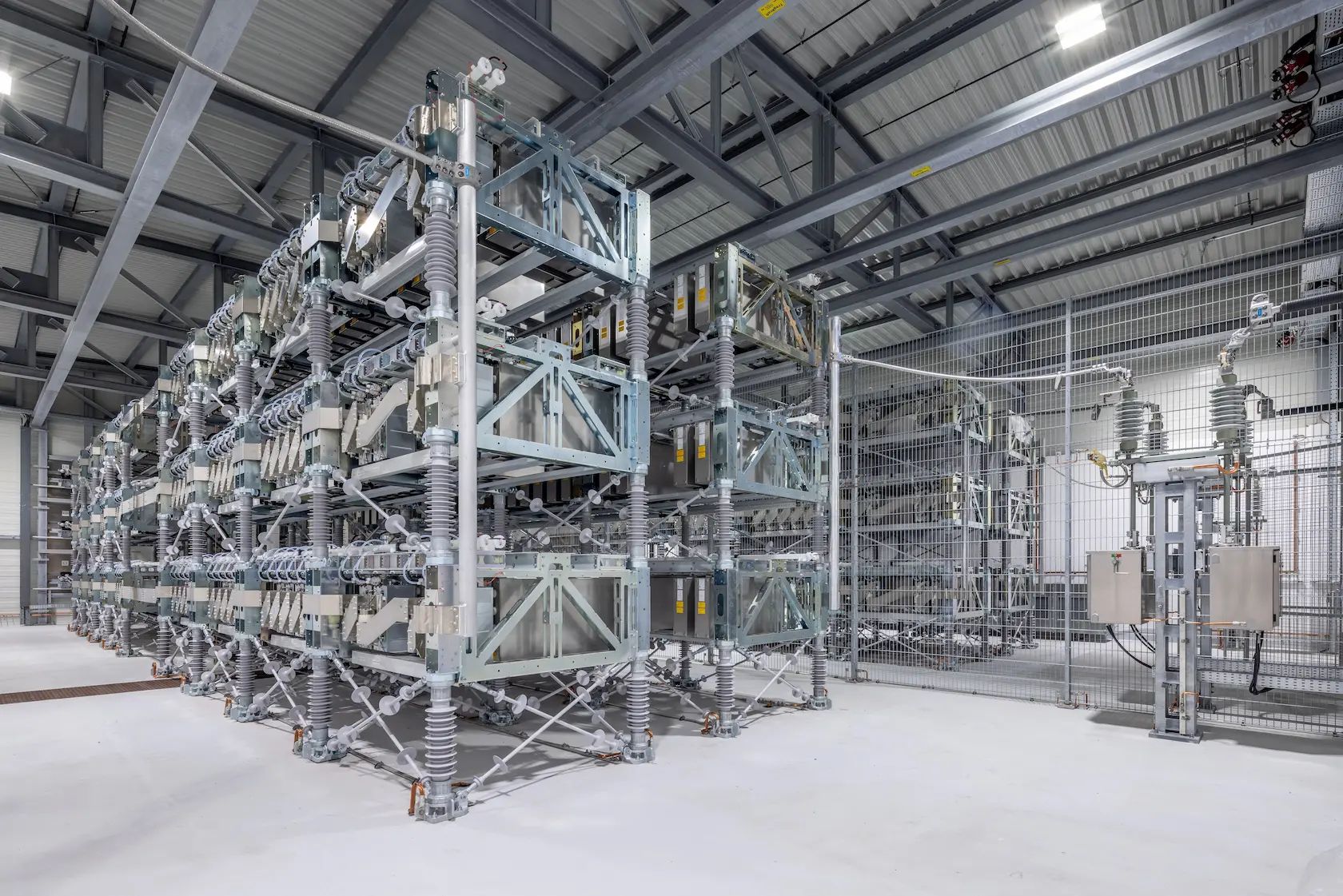
Converters built from submodules manage these bursts, switching vast currents in microseconds and utilizing advanced cooling systems.
In the control room, monitors display vital signs of the facility, including temperature readings and system status. Thanks to sophisticated control systems and surveillance, the facility operates automatically and is monitored remotely.
While Mehrum is just one site, it serves as a blueprint for renewable-ready grids, with implications that extend well beyond Germany. Demand for E-STATCOM technology is also rising in the USA, Canada, China, Australia, and many other countries.
Moreover, the same architecture provides distinct advantages in managing AI-driven load fluctuations, which are expected to present considerable challenges for utilities in the coming decades. All these trends further affirm that this innovative E-STATCOM solution is poised for a bright future.
Ultracapacitor energy storage module 144V and 130V
63F, 71F, 104F
SECH’s energy storage system (ESS) module shows a stackable 19” rack design. It is the basic element to build up larger scale stationary energy storage systems for applications such as grid stabilization, transportation substations and UPS. The ESS module features ultra-low ESR, laser-welded connections, active voltage balancing, temperature monitoring and diagnostics through a CAN bus interface.